

- How long does a stay in transitional living usually last?
Most programs set a minimum of 90 to 180 days. In practice, many residents stay 6 months to more than a year. Length depends on the person’s history, work situation, and how sobriety is settling in. Longer stays are correlated with better long-term outcomes.
- Can my loved one go straight from home to transitional living without rehab first?
Sometimes, yes, if they’re at least 72 hours sober and don’t need medical detox. Many programs prefer residents who’ve completed inpatient or outpatient treatment first, because clinical care handles things sober living isn’t set up for.
- Is transitional living the same as a halfway house?
Not quite. Halfway houses are often court-ordered and tied to the criminal justice system. Transitional living homes are usually voluntary and structured around 12-step or similar recovery programs. Some homes accept both populations. Ask.
- How involved can I be as a family member?
Most programs welcome supportive family involvement, especially at scheduled family days or milestones. What they don’t want is family calling daily to check on rules or trying to advocate for their loved one to get around consequences. Ask each program what family involvement looks like there.

When someone you love finishes treatment, relief and worry arrive together. Inpatient care did its job, and now day one of everything after begins. Home feels risky. Independent living feels early. Something in between is what most people in early recovery need, and figuring out what that looks like usually falls to family.
This guide covers what a strong transitional program looks like, what your role is (and isn’t), and the questions to ask before signing paperwork. If you’re researching transitional living programs in Sonoma County, it will help you compare options with clear eyes.
Key Takeaways
- Transitional living fills the gap between clinical treatment and independent life, usually 90 days to a year or more.
- The best programs combine structure, accountability, and community, not just a bed in a sober house.
- Your role as family is support, not control. Recovery is your loved one’s work.
- Ask specific questions about staff, rules, meetings, and what happens after a relapse before committing.
- Selective programs that interview residents tend to protect the house culture better than programs that fill beds fast.
Understanding Transitional Living Programs
Transitional living, sober living, and recovery residences all describe roughly the same thing: a structured, drug-free home where people in early recovery live together while they rebuild jobs, relationships, and daily routines.
It is not rehab. There’s no detox, no clinical therapy, no doctors on staff. Residents attend outside meetings, work outside jobs, and follow house rules together.
It is also not a regular apartment. Curfews, chores, drug testing, and required meetings are standard. That structure is the point.
Most residents come straight from inpatient or outpatient treatment. Some come from court or a family intervention. A few come from another sober living house that didn’t fit their needs.
Most Relapses Happen in the First Year After Treatment
The first year after treatment is when most relapses happen. The reasons are practical:
- Old friends
- Old routines
- Unstable housing
- Boredom
- The sudden freedom to make every decision alone
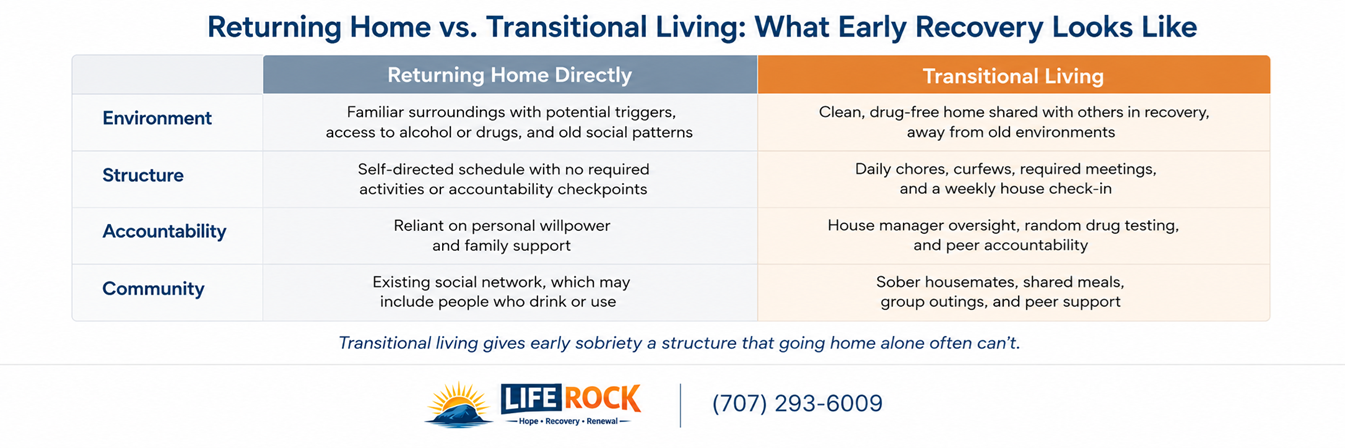
Transitional living removes several of those pressures at once. A resident wakes up in a clean home with sober housemates, has a schedule to keep, and can’t avoid accountability. That combination gives early sobriety room to settle in.
What a Good Transitional Program Provides
Not every sober living house is built the same. Some are basically boarding houses with a no-drugs rule. The ones that actually help people stay sober share a few features.
Clear Structure
Good programs run on rules that residents know and agree to in writing. That includes:
- Curfews
- Required 12-step or recovery meetings (often 90 meetings in 90 days for new residents)
- Weekly house meetings where residents check in
- Random drug and alcohol testing
- Daily chores and household responsibilities
- A work requirement or active job search
Structure sounds restrictive to families at first. In practice, it’s what gives a person in early recovery something predictable to hold onto.
Accountability
Structure without accountability is just a list of rules. A strong program has house managers, often people in recovery themselves, who notice when a resident is slipping.
- They ask direct questions
- They enforce consequences
- They also celebrate the small wins
Twice-weekly house meetings, peer feedback, and honest conversations are how accountability lives in a house day to day.
Community
Isolation is dangerous in early recovery. The right home puts your loved one around people who understand the work because they’re doing it too. Years later, community is often what residents say made the difference. That shows up in small, everyday ways:
- Shared meals and inside jokes
- Group outings and sober social events
- Peer accountability that doesn’t feel punitive
- Brotherhood or sisterhood with people on the same path
Those elements rarely appear in program materials, but they are often what sustains sobriety when structure and determination alone fall short.
The Family’s Role: Support, Not Control
This is the part families struggle with most, so it’s worth being direct.
Your job is to support your loved one’s recovery. Their job is to do the recovery. Those two things sound similar and are not.
Support looks like: listening, celebrating milestones, helping with logistics when asked, showing up to family days, staying sober around them, and keeping your own life healthy.
Control looks like: choosing their program for them, calling the house manager to check up, negotiating rules on their behalf, or paying for things in ways that let them avoid consequences.
Most transitional programs will tell you the same thing: residents who feel their family respects their agency do better than residents whose family stays in the driver’s seat. That doesn’t mean stepping back completely. It means shifting from managing the person to walking alongside them.
Talking to Your Loved One About Transitional Living
Timing matters. So does language.
The best window is often near the end of an inpatient or outpatient program, when the resident’s counselor is already discussing aftercare. Bring it up as a next step, not a punishment or a lack of trust.
Some phrasing that tends to land:
- “What are you thinking about after treatment ends?”
- “I’ve been reading about sober living homes. Can we look at a few together?”
- “This isn’t about not trusting you. It’s about giving you the best shot at the year ahead.”
If your loved one resists, don’t argue. Ask what worries them. Cost, loss of independence, and fear of a bad house are common concerns and worth taking seriously. Sometimes touring one or two homes together shifts the conversation.
Questions to Ask Any Transitional Living Program
Before you recommend a program or your loved one agrees to move in, get answers to these. Ask on the phone, ask again at the interview, and pay attention to how the answers land.
About the Program Itself
- Are you a nonprofit or for-profit? How does that shape decisions about who gets in?
- What’s the minimum length of stay?
- What does a typical day and week look like for a resident?
- How many residents live in each house?
- Do you have gender-specific homes?
About Structure and Rules
- What are your rules around curfew, chores, drug testing, and meetings?
- What’s the process if a resident relapses? Is there a path back in?
- How do you handle conflict between residents?
- Do you require a work program or job search?
- Are visits from family allowed? Under what conditions?
About Staff and Safety
- Are house managers in recovery themselves?
- What training or credentials do staff have?
- How is confidentiality protected?
- What partnerships do you have with local treatment centers?
About Cost and Admission
- What does it cost per month, and what does that cover?
- What does the intake process look like? Is there an interview?
- What disqualifies someone from being accepted?
- Can we tour the home before committing?
Programs that interview prospective residents (rather than accepting anyone with a payment) tend to protect house culture better. Selectivity is a green flag, not a red one.
Talking With Your Loved One About Transitional Living
Once you’ve researched a few programs and have honest answers to your questions, sit down with your loved one. Bring the notes. Ask which program felt most like the kind of house they could picture themselves living in for 6 months to a year.
Then hand the decision back. This is the part they need to own for themselves.
Call Life-Rock for a Confidential Conversation
Choosing a sober living home is one of the harder decisions a family makes. You don’t have to work through it alone.
Contact us online or call Life-Rock at (707) 293-6009 for a confidential conversation about your loved one’s situation, what to expect from transitional living, and whether Life-Rock might be the right next step.