

- What is sober living?
Sober living is a structured, substance-free group home for adults in recovery from alcohol or drug use. Residents live together, follow house rules, attend recovery meetings, and hold each other accountable. It is a step between treatment and fully independent living. Clinical care still comes from your treatment team.
- How does sober living work?
You move in after meeting basic requirements, usually 72 hours clean, 18 or older, and a short interview. From there, you follow a daily routine built around recovery: meetings, chores, work or school, house check-ins, and random drug testing. The structure is designed to protect your sobriety while you build a stable life.
- What is the difference between sober living and a halfway house?
Halfway houses are often tied to court or correctional systems and have fixed timelines. Sober living homes like Life-Rock are voluntary, open-ended, and focused on recovery rather than reentry. Both give you substance-free housing, but the entry path and goals are different.

The place you live after treatment matters more than most people realize. Where you sleep, who is in the next room, and what sits on the kitchen counter will shape your mood, your routines, and whether early sobriety holds.
That is why sober living in Sonoma County is a step a lot of people take between treatment and fully independent life. It gives you a stable, substance-free environment with people who understand the work.
This post explains how your environment shapes long-term sobriety, what daily life in a sober living home looks like, and how to know if the next step is right for you.
Key Takeaways
- Sober living is structured, substance-free housing for adults in early recovery who need support between treatment and independent living.
- Your environment affects your mood, routines, and relapse risk more than most people realize.
- Daily life in a sober living home includes house meetings, 12-step attendance, work or school, chores, curfews, and random drug testing.
- Sonoma County has an active recovery community, a quieter setting, and distance from old triggers.
- Life-Rock accepts men and women who are committed to their own recovery and the recovery of their housemates.
What Is Sober Living?
A sober living home is a shared residence for adults in recovery from alcohol or drug addiction. It is a structured, drug-free place to live while you rebuild. There is no detox, no clinical therapy, and no medical staff on site; that work happens at treatment centers Life-Rock partners with.
Most reputable sober living homes have the same core features:
- Zero-tolerance policy on drugs and alcohol, backed by random testing.
- House rules around curfews, chores, meeting attendance, and conduct.
- Peer accountability through regular house meetings and shared responsibilities.
- A commitment to recovery work, usually through a 12-step program.
Length of stay varies by program. At Life-Rock, the minimum is 90 days for men and 180 days for women, and most residents stay longer.
Why Your Environment Matters More Than Willpower
Addiction thrives in chaos, isolation, and places where using is easy. Recovery needs the opposite. A home where:
- No one is drinking
- No one is holding
- No one is pressuring you to loosen up gives your body and brain room to settle
Clutter and noise raise anxiety. A quiet, clean house lowers it. The people around you who understand recovery give you something you can’t find alone: honest feedback from someone who has been there.
The environment doesn’t do the work for you. You still have to show up, go to meetings, and face the parts of yourself you’ve been running from. The right setting just stops working against you while you do it.
What Daily Life Looks Like in a Sober Living Home
The structure is predictable on purpose. Early recovery is hard enough without having to invent a routine from scratch.
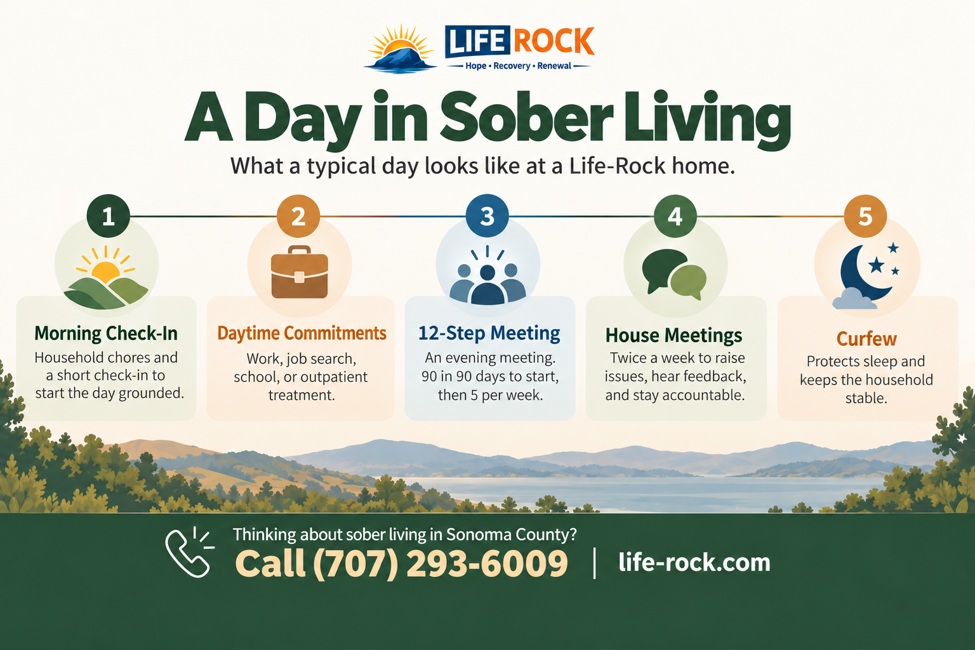
A typical day might include:
- Morning check-in and household chores.
- Work, job search, school, or outpatient treatment during the day.
- A 12-step meeting in the evening (90 meetings in 90 days is standard at Life-Rock, then 5 per week after).
- House meetings twice a week to raise issues, hear feedback, and stay accountable.
- Curfew to protect sleep and keep the household stable.
You’ll also share meals, outings, and ordinary life with other residents. That part matters. The friendships people build in sober living often become the first real sober relationships they’ve had in years.
Why Sonoma County Is a Good Place to Heal
Sonoma sits in the North Bay, away from the pace and distractions of busy cities like San Francisco. Open space, trails, and quiet neighborhoods make it easier to slow down and pay attention to how you actually feel.
A few practical reasons sober living in Sonoma County works for long-term recovery:
- Active local recovery community. AA, NA, and other 12-step meetings run day and night across the county.
- Lower day-to-day stimulation. Less noise and traffic means a calmer nervous system.
- Access to nature. Walks, hikes, and the outdoors are part of how a lot of people here reset.
- Distance from old scenes. If your using life was centered somewhere else, Sonoma can give you breathing room.
The Sonoma setting supports recovery by making day-to-day life calmer. The quiet, the trails, and the local meetings all point in the same direction as the work you’re doing.
How to Know If Sober Living Is Right for You
Sober living fits well if any of the following are true:
- You are finishing treatment and your home is not a safe place to return to.
- You have relapsed before and want more structure around you this time.
- You live with people who still drink or use.
- You are new to recovery and want to be around people doing the same work.
- You want a stable base while you look for work, go to outpatient, or finish school.
If you are not sure, start with a conversation. No commitment, just a chance to hear what the next step could look like.
The Life-Rock Approach
Life-Rock is a nonprofit. That matters because we’re not trying to fill beds for revenue. We look for people with a real desire to recover and the willingness to help their housemates do the same.
A few things that set us apart:
- Nonprofit, mission-driven housing serving Sonoma and Marin counties.
- House managers in recovery themselves, offering lived experience alongside structure.
- A top referral source for well-known treatment centers in the North Bay.
- Gender-specific homes for men and women, with longer minimum stays than most programs.
- Confidentiality as a core principle. What happens in the house stays in the house.
You can read more about our story on About Us or see our current homes on the Housing page.
Ready to Take the Next Step in Your Sobriety? Call Life Rock Today
If you are thinking about sober living in Sonoma County, calling is the easiest way to see if Life-Rock is a fit. The first conversation is confidential, no pressure, and no commitment. Healing takes time, and you don’t have to figure out the next step alone.
Call: (707) 293-6009
Or: contact us online
Frequently Asked Questions